Wednesday, September 1, 2010

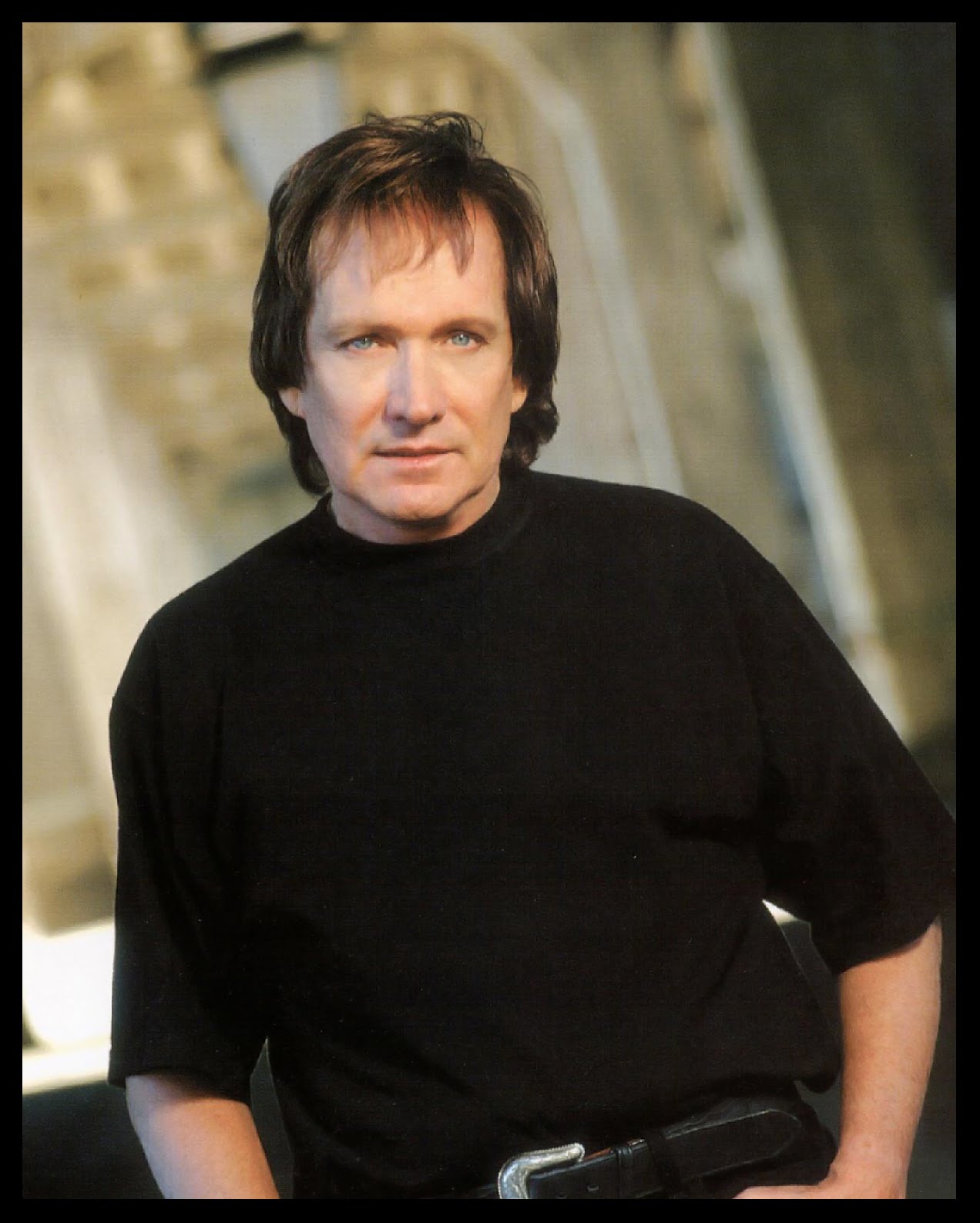
INTERVIEW: T. Graham Brown

by Chad Cooper - June, 2009

Like so many others before - and after - him, T. Graham Brown moved to Nashville in 1982 to chase his dream of becoming a country music star. It didn't take long for the Georgia-born singer to find success as more than a dozen of his songs found their way into the Top 10 chart including three No. 1 hits - "Hell and High Water," "Don't Go to Strangers" and "Darlene."

Where did the "T" come from?

Well, my full name is Anthony Graham Brown. Anthony and Graham came from both grandfathers. Anthony got shortened to Tony. Then Tony got shortened to T. The funny thing is, when I moved to Nashville in 1982, there was a guy in the music business named Tony Brown who was a big time record executive and he also played in Elvis' band. When I began calling the record companies, I would say this is Tony Brown and they would put me right through. They would pick up asking me to come in and do another session and so forth and I would say "no this is Tony Brown from Georgia' but they always hung up on me.

I assume you were a big music fan growing up...

Oh yeah. I grew up in a little town called Arabi and would listen to a little transistor radio. Back then they didn't have a radio station for each genre. I would listen to one station and would hear George Jones, Otis Redding, Ray Charles and Porter Wagoner. I moved to Athens, where the University of Georgia is, and that's a big music town as well. That's where the B-52's and REM are from.

I started in a duo called Dirk and Tony and we sang at the Holiday Inn in Athens playing beach music, like the Drifters and stuff. It was just the two of us with Dirk playing the guitar. He was a business major in college and didn't want to pursue it and I wanted a band. I then formed my owned country band called T. Graham Brown and Rio Diamond, which is the name of a truck. Diamond Rio also took the truck name but just reversed it.

How did you land so many jingles for national companies?

When my wife and I first moved there, she worked at a department store and I just went around meeting as many music people as I could. Back then, you could walk in any record company and leave a tape for them to listen to and I started doing a few small showcases in town. A company called Tree Publishing hired me to sing some demos and they would pitch the songs and one of the guys had a connection with an agency in New York. They asked me to sing a Coca-Cola jingle so I flew to New York and that's how it started. Then several agencies in Nashville began doing national jingles and I was able to do work with McDonald's and Taco Bell. I was the face and voice for Taco Bell for about four years. Remember 'Run for the Border?' But then I got replaced by a talking Chihuahua. I did hundreds of different ones from "Sometimes you feel like a nut' for Almond Joy and I had the first $1 million minute advertisement in the Super Bowl for McDonald's. I sang 'Put your hands together around a hot Big Mac.'

Your thoughts about the music industry from then and now...

I signed with Capital Records and Garth Brooks was also signed with the label. He blew up and sold 17 million records right out of the box, which was unprecedented for the country music industry. There's no formula for that but in return every record label wanted a Garth. Everyone on the radio was starting to sound like Garth. When I started out, and even way before that, when a song came on the radio, you immediately knew who it was. The voices and styles were distinctive. You have consultants at radio stations telling the disc jockeys what to play according to their own taste. It hurts when you are not being played on the radio. Fans think you have retired, died or gone out into the woods. The music has changed to everything being processed. From recordings and even during concerts musicians are using programs like Pro Tools to help them sound a certain way. I am blessed that I have a voice that doesn't require any processing.

So, after all these years, you still love doing this?

For starters, it's a living. People think if you have one record out then you are a multi-millionaire, and let me tell you it's not the case. I love to do this. I've made great friends here in Nashville like George (who is like my Nashville daddy) and Nancy Jones, Vince Gill and Amy Grant, Ricky Skaggs and Marty Stuart. Going out on stage and signing is great, especially now with the economy. Smaller markets are not doing festivals anymore and club owners are scared to take a chance on someone for the fear they won't make their money back. People have to have food and clothes but they don't have to see a live show so we are tickled when fans come out to see you and enjoy the music. I'm working on a new record now. We are going to put some older songs like "Wine into Water" with some new songs and I am also working on a gospel album and a project where I sing some music from the 1940s. You just have to try to keep trying to reinvent things and hope that people like it.

Official T. Graham Brown Website
Click here to purchase T. Graham Brown music

INTERVIEW: Ian Moore

by Chad Cooper - May, 2009

Ian Moore is known as a guitar prodigy. The 41-year-old former Austin resident has even been given the title of the "Roy Orbison of the 21st Century."

When did you first discover music?

It was really over time. My first instrument was the violin. There was a string project in Austin, actually those projects are all over, but they teach kids how to play string instruments. I started and received a lot of positive attention when I played. Because of a hand injury, I didn't start playing guitar until I was 16 but I knew then I wanted to be a musician.

Oh yeah. I wish I could go back because it was so funny. During the summer, our family would go to Wisconsin and I had an older friend there who was a DJ. He was playing a show, it was the 1980s and back then it was mostly New Wave music but I got up in the middle of his set and started playing some Buddy Holly with my violin. The funny thing was I was wearing one of my dad's Indonesian coats. He collected Eastern artifacts. Remember the "Synchronicity" video by the Police? It looked like one of those jackets. Yeah, it was like a wizard jacket. What a great debut.

Outside of Jimi Hendrix, who were some influences?

Early on, Buddy Holly more than any. There was the Beatles but with a guitar there's Benny Freeman, Albert King, Jerry Butler, Aaron Neville, Leroy Brothers in Austin. I was a big record collector so I could go on and on. And Richard Thompson. I try to find inspiration everywhere because I didn't want to be just some other guy wailing away at an instrument. He was one of the greatest that ever lived. People look at Eddie Van Halen, Steve Vai and Steve Ray Vaughn with all the flashy stuff but Richard does all of that without you knowing. He slices and dices. He's mind-blowing.

As a singer-songwriter, do you adapt to the ever-changing industry?

I don't really think about the music industry going into a project. I've adapted some but I'm always writing. There was a moment when the music industry, as a whole, was behind in my career. I like the artists who speak their minds and do their own thing. The main thing I try to do is get better - better melodies, better singing and interesting production. I want to leave a good body of work.

Hanging out with Bob Dylan must have been cool.

Oh yeah. Sitting backstage with him talking about the Beatles was pretty big but a bigger moment in my career was playing the final show with the Rolling Stones in Dallas at the Cotton Bowl in 1996. It was sold out and it was a real sense of how far I've come. It was exciting and scary at the some moment.

What is Austin groovy?

It's a liberal city and artists love freedom. It has changed some but there's still a ton of places to play and the standard is very high. If you don't deliver something interesting there, you won't get another gig so that makes musicians stay on top of their game.

You are about to record another album. What's left?

I feel like I haven't really done anything. As a guitar player, I feel like I have just discovered my voice. Music is a never-ending template.

Official Ian Moore Website
Official Ian Moore Myspace
Click here to purchase Ian Moore music

INTERVIEW: Ray Benson of Asleep at the Wheel

by Chad Cooper - May, 2009

He stands 6-foot-7 and hails from Philadelphia, Pa. That alone may give you the impression he's a professional athlete. He did play basketball in high school, but tunes were on his mind.

Ray Benson is a living legend and has been the front man of Asleep at the Wheel since its inception when he formed the band in 1969 in Paw Paw, W. Va.

"I knew I wanted to play music," said Benson. "I was in college for one year studying filmmaking and I realized I wasn't going to be happy unless I was playing music, so I jumped in head first."

Benson grew up in a family that loved playing music. None were professionals and Benson started early.

"I got my first guitar when I was nine, then wound up being a professional at 11 playing folk music with my sister and some of our neighbors during the early 60s," he said. "My parents thought it was just a hobby but it wound up being otherwise."

Benson, along with Lucky Oceans, who has since left the group, put together a group of musicians playing country music and called themselves Asleep at the Wheel. Benson recalls their first real gig came in 1970 in Washington D.C. with Hot Tuna and none other than Alice Cooper.

"We were hardly a band," laughed Benson. "Then, Alice didn't have a record deal and the headliner (Hot Tuna) was a Jefferson Airplane spin-off band. We were playing country music, like truck driving, Johnny Cash, Hank Williams music. It was different."
Traditional country music wasn't in the cards for Asleep at the Wheel.

"I thought the roots of great American music had been forgotten," said Benson. "We wanted to bring some of it back in our own special way."

And that they did, but Benson soon discovered Bob Wills, a native Texan they still call the "King of Western Swing" more than 30 years after his death.

Benson never talked to Wills. He went to Dallas to see him but Wills wasn't in very good health. When he arrived, Benson saw him in a wheelchair but the family told Benson that Bob would talk to him tomorrow, but the King of Western Swing died later that night due to complications of a stroke.

"He was one of the most charismatic entertainers the world has ever seen," explained Benson. "I know that's a bold statement, but it's true. He had some of the greatest musicians playing for him and there were hundreds of them. His music was such a great derivative of jazz, blues, folk and western country. He was totally unique. There was never anyone like him and never will be."
He became so fond of Wills that Benson recorded two tribute albums and wrote a play with friend and writer Anne Rapp called "That's It: The Conversation You Never Had."

Then, there are the days with Willie Nelson, whom Benson met in 1971 but says Willie doesn't remember.

"We were backing up some country singers in Greenville, N.C., and he was on the show but he says the first time he remembered us was in 1974 when he heard our album. He said he wanted to see these weird people playing some Bob Wills music."

Asleep at the Wheel's latest project is "Willie and the Wheel," which he describes as a great record. Benson and his group collaborated with Nelson playing hits from both Willie and the group. The album also has Paul Shaffer and Vince Gill in the mix.

"Dave (Letterman) is a great friend of ours and he was down here doing a Habitat for Humanity house and we asked Paul to play a cut," said Benson. "Vince is one of my great pals and a great guitar player besides being a great singer."

Benson said the group just taped a record 11th performance on "Austin City Limits," which is America's longest running television music series.

"It's simple," he said. "They let you play music. There's no jokes with comedians. They just turn on the cameras and record it." Benson said the show will probably be televised on PBS in the fall.
After spanning four decades, recording 29 albums and winning nine Grammys, one would think the 58 year old would be ready to kick back and enjoy life. But that's the furthest thing from the truth.

"I refuse to quit," he said. "I love to perform and that's why I keep doing it. There's nothing better than standing on stage and being perceived well for what you do. I have enough ideas to last me another 50 years that I want to get done. I wake up every morning and get my ass in gear and figure out how to do it. This year seems like the best year we've ever had. We love to tour and work very hard to put on a great show."

Official Asleep at the Wheel Website
Official Asleep at the Wheel Myspace
Click here to purchase Asleep at the Wheel music

INTERVIEW: Lee Greenwood

by Chad Cooper - April, 2009

It's hard to imagine that country singer Lee Greenwood is nearing the age of 70.

Born and raised on a farm in California by his grandparents, Greenwood found mainstream success during the early 1980s with hits "I.O.U." and "Ring on Her Finger, Time on Her Hands," but it was the rebirth of "God Bless the U.S.A." after the attacks of 9/11 that secured his place in music history.

Greenwood originally wrote and recorded the single in 1984, which earned him the CMA Song of the Year, but the song regained popularity during the first Gulf War in 1991 when the armed forces launched Operation: Desert Storm. The song rose again in 2001 following the terror attacks on Washington and New York. For the second time, the song went to No. 1 but this time on all the music charts across the board.

"Going No. 1 for a second time gave it a unique position in music due to the circumstances the country was in," said Greenwood. "The song would not have been another substantial hit if America was not attacked on 9/11. I think America needed that song and the only recording of that song was available on Capital Records. We made an album called "American Patriot' and when 9/11 struck, it went double platinum. In broad aspect, this song has impacted now four generations."

Greenwood's original intent behind the song was to write something that was cohesive for the country and to write a closer for his live show.

"Being from California and not traveling much, I wanted to bring together the country," he said. "I wanted to shorten the distance. The opening line, "Tomorrow all the things are gone, I worked for all my life,' was about my grandparents farming. When they subsidized grain to the Russians during that time, I realized it cut into the economy of my grandparents' farm. That was a tribute to them. Plus, when I was 14, I worked for the USO in San Diego and recognized the services the military were doing and wanted to do something for them."

Greenwood witnessed Elvis Presley performing at the Flamingo in Las Vegas and saw that he ended his show with the "American Trilogy' and wanted to do the same. "I told myself I wanted to close my show with that if I ever got stardom," he said. "After I began to get records on the radio, I asked myself why would I do the Trilogy? It would be redundant. I needed to write one for myself, so there was a lot that went into that piece of music."

There's so much more to Greenwood's career than that one song. Greenwood said he discovered music at the age of 9. His parents were divorced when he was young (he didn't meet his father until 14) and his mother worked most of the time, so he was raised by his grandparents.
"I was given the opportunity to study music," he explained. "There was a piano in the house and I used to play it all the time and it just felt good."

Greenwood excelled in more than music. He was a star baseball player in high school and was faced with the decision to go to college with a music scholarship or move on to play college baseball.

"There were some regrets but as I look back, my baseball career would have been over a long time ago," laughed Greenwood. "There were regrets at the time because I worked Las Vegas when I was 17. I was playing the major resorts and they each had a softball team so I would play. There's a little remorse but it didn't really matter."

Las Vegas and Reno, Nev., would be where Greenwood would polish his resume. He played the circuit opening for different artists while playing his own shows and met fellow musicians Felix Cavaliere and Dino Dinelli. They approached Greenwood to form a group but he declined. That band was the Young Rascals, who went on to record the hit single, "Good Lovin," but Greenwood didn't mind the misfortune because he wanted to be a solo artist.

"I had great experiences in Nevada," he said. "From being a backup, a leader, and even a dancer. I arranged everything in my show and even did some things for other artists. Getting over the fear of being in front of audiences was big for me. I was very shy and didn't like being in front, especially being so young. The success you get today on "American Idol' forces you to be in the front and makes you talk. I did that for 18 years and finally got more comfortable, and when my career hit, even though I didn't have a lot to say, I was able to talk."

Greenwood finally left Nevada for Nashville thanks to Larry McFaden, the bassist and bandleader for country singer Mel Tillis. Tillis was headlining a show at the Nugget in Reno when during a break in their show, he went over to watch Greenwood perform in a side room. He liked what he saw and thought Greenwood had plenty of potential.

"Larry wanted to find an artist he could manage," he said. "We hooked up a year later and talked about the future and decided to go to Nashville to be a country music artist."

In 1980, Greenwood was one of five artists to sign a record deal along with Reba McEntire, George Strait, Barbara Mandrell and the Oak Ridge Boys. All signed with MCA Records - and the rest is history.

"I may not be as creative as I used to be, but I am in the midst of raising my two sons that take up about 80 percent of the time," he said. "This is what I do and what I know. I still enjoy performing, getting on stage and making people happy."

According to Greenwood, he still performs about 100 shows a year including private shows and a stint in Branson, Missouri.

He was appointed by former President George W. Bush to the National Arts Council and is a spokesperson for Operation Never Forgotten among other charities.

Greenwood has two music projects in the works with a pop album, "Proven," and a country album.

"A pop album is something I always wanted to do," he said. "My background is jazz and rhythm and blues. Some people I admired as singers were Sam Cooke, Bobby Darin and Kenny Rogers. When Sony (Records) called me and wanted to do a pop album, I took most of the songs I could think of that were conducive to my vocal range but also songs I liked." Songs by Cyndi Lauper, Ray Charles, Michael Bolton, Whitney Houston and Babyface will be on the new album that will soon be released for purchase.

The country album will be an easy sell, but is there still a market for Greenwood's music?

"Well, we are going to find out," he said. "Lots of artists near my age are having a difficult time finding a place where their fans are. The good news is we don't have to rely on radio. The Internet allows us access to the audience but the flipside is some of my audience may not be Internet savvy and they have to find you. The way to do that is by live performances and television."

Despite recording more than 20 albums, which sold millions and charted more than 35 singles, Greenwood says his biggest and greatest hope is to see both of his kids' graduate college. "I've accomplished so much in my career but that really means the world to me."

Official Lee Greenwood Website
Click here to purchase Lee Greenwood music

INTERVIEW: Billy Joe Royal

Billy Joe Royal
by Chad Cooper - April, 2009

Though his music career was not inundated with No. 1 hits, Billy Joe Royal's story is as colorful as the lyrics of his 1965 hit song "Down in the Boondocks."

His best friend is B.J. Thomas; he was a neighbor to Kenny Rogers; and aside from hanging out with Elvis, Royal found time to record songs such as "Cherry Hill Park," "I'll Pin a Note on Your Pillow," "Tell It Like It Is" and "Till I Can't Take It Anymore."

Royal's career spans from the 1950s and it is no fluke he continues to perform 60 to 70 sold out shows per year.

He took time out of his schedule to reflect on his career and promote his upcoming sold out concert April 17, 2010 at Honky Tonk Texas in Silsbee.

How did you find music?

I was a complete music junkie. I was born in Valdosta, Ga., and my uncles were in a band and had a little radio show but then I moved to Marietta when I was 9 and began performing on the weekly Georgia Jubilee Show. It was on Friday nights and they would tape it and play it the next day on the radio. The show would bring in a Grand Ole Opry star each week like Little Jimmy Dickens but they had their regulars like Jerry Reed, Ray Stevens and Joe South. I went to school with Priscilla Mitchell, who then was dating Jerry Reed and later married him, and she asked me to audition for the show and I did and got a spot on it. After the Jubilee broke up, I moved to Savannah and got a job at this big club called the Bamboo Ranch. Man, that place drew 3,000 people a night. I hooked up with Joe South and we got our boss to book big names like Sam Cooke and Fats Domino, Ray Price, Marty Robbins and Roy Orbison. At an early age I learned from the best.

Man, am I talking too much?

No way, this is great. You first song, "Down in the Boondocks,' was your biggest. How'd that come about?

I did the craziest thing. For some reason I wanted to leave Savannah and left for Cincinnati. I was working at a club and met a disc jockey named Dusty Roads who came out to one of my shows. President Kennedy was assassinated and he wanted to do a tribute show at Cincinnati Gardens but I had never worked in front of kids before.

All of sudden, all the kids are following me around town. And then Joe (South) called me and said he had a song for me called "Down in the Boondocks' so I flew back to Atlanta to cut it. The record went No. 1 in Cincinnati overnight and then it just blew up across the country. I got a call from Dick Clark and it changed my life.

You and B.J. Thomas are the best of friends.

Oh yeah. We've been friends for 100 years. We met in your neck of the woods, in Houston. I played a show in Houston in 1965 with Roy Orbison, Marty Robbins and B.J. and we have been friends ever since. About two years ago, we had the same agent so we started touring together and called the show the Raindrops and Boondocks Tour. We are the same age, knew all the same people and basically had the same background.

How did you meet the King of Rock-n-Roll?

I was so damn in awe. I remember the date like it was yesterday (Jan. 31, 1970). I went to see one of his shows with Bill Lowry, who produced Joe South's "Walk a Mile in My Shoes,' and we got invited to his dressing room. He could not have been any nicer. I just thought he was being nice by inviting us back. In those days you played a month at a time at those casinos and about a year or so later, we both played at the Lake Tahoe and he was playing the main room and I was playing the lounge and our names were on the sign together in red and I would kill for a picture of that sign.

A friend of mine that played on 'Down in the Boondocks', Henry Gordon Jr., left Neil Diamond's band and began playing bass for Elvis, and I was backstage every single night. And you know what? I never took a photo with him. He was the man that inspired us all. A southern boy who made it big and became the king so we thought we had a shot at being something.

What do you consider your greatest accomplishment?

The longevity of my career. I've done plenty of good things. Back in 1970 when "Cherry Hill Park' came out, nothing really charted after that. I could never really get arrested.

Seriously though, I moved to California and lived in the same neighborhood as Kenny Rogers. He was doing a TV show at the time, back in 1977. Kenny came over one day and said he had this production deal from United Artists and asked if I wanted to do some songs he had and if I didn't like them, then he would just throw them out. I called a friend of mine and he discouraged me not to do it. Well, about two months later "Lucille' came out and he took over the world and I was too embarrassed to go over and say anything else to him after that. Then in the early 80s B.J. (Thomas) started having No. 1 hits in the country world, so I thought, you know I am going to give it one more shot. I moved back to Georgia and began driving up to Nashville and found this song called 'Burn Like a Rocket' and I loved it but I couldn't give it away. I went back down to see Bill Lowry and he put it on an indie label and we worked that thing like no other from doing rodeos to singing the National Anthem - anything to get anyone to play it. Then, when markets started playing it, it became No. 1 in that market so we went back to Nashville but still couldn't get a deal. Finally a pop station in Tampa (Florida) played it and Atlantic Records called and I got a deal. If I did anything, I hung in there. Of course I nearly had a nervous breakdown in the meantime but B.J. and I think we are the luckiest guys in the world to be able to continue to do this.

What's left on your musical agenda?

My favorite singer is Sam Cooke. He was the greatest I ever heard. I read an article a few months ago in Rolling Stone about the top 100 singers and Sam was No. 4 on that list. Sam owned the Gospel music world and I wanted to do a Gospel album so I did and it will be out in June. I thought I better take the opportunity now while I still have a voice.

Official Billy Joe Royal Website
Official Billy Joe Royal Myspace
Click here to purchase Billy Joe Royal music